Agriculture
Regenerative and lazy
Agroforestry
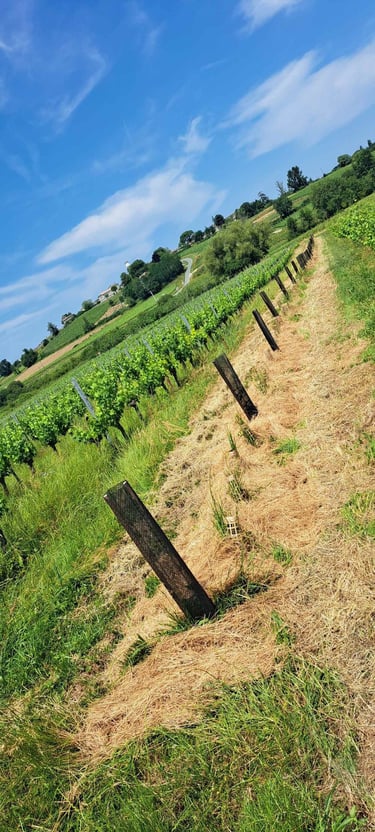
Agroforestry, or more broadly, soil cover vegetation, seeks to ensure a natural and functional balance of the agricultural system through diversification, crop layering and maximum complementarity between the different "compartments" of the ecosystem (soil, plants, animals, atmosphere).
We have planted 2,250 trees since taking over the estate in 2021.
- 550 trees in 2023
- 1,700 trees in 2025
- next planting planned for 2027.
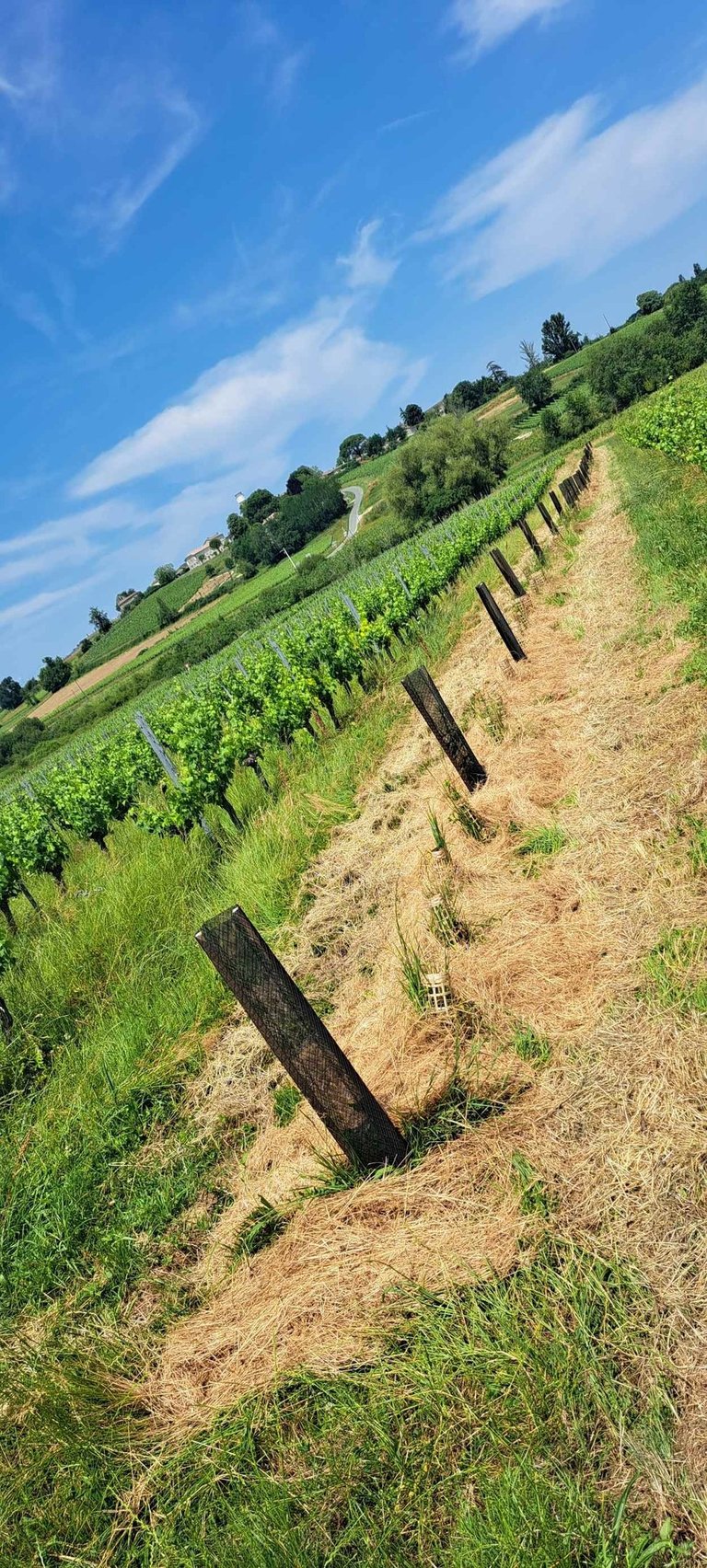
We plant mainly in hedgerows, dividing our vineyard plots into smaller plots, which are thus separated by hedges/trees.
Animals
Regenerative agriculture aims to bring animals back to the land through rotational grazing, allowing them to express their natural behaviors (which contributes to their well-being and health). By harnessing natural processes, it seeks to be a positive force, not simply to minimize negative impacts.
We have about twenty Ouessant sheep, a hardy breed that loves to graze in the vineyards and our orchards.


Total grassing
A way to protect soils from erosion and the harmful effects of direct exposure to rain, frost and solar UV rays.
This practice is an alternative to chemical weeding and tilling, and if the cover crops are rich in legume species, they will also be a natural source of nitrogen enrichment for the soil.
There is of course an impact on grape yields and competition with our vines, the important thing is not to seek "yields" as has been done for so many years.


Minimizing actions (laziness)
This may seem logical, but it is important to think before acting, before each intervention/action with a tractor:
Is it really necessary?
If I don't do it, what will the impact be?
Is it possible to perform two actions at the same time?
Each outing has an impact on the soil, on the life of the estate and its carbon footprint, but also economically, mechanical wear, diesel, lost time, etc... I start from the principle that nature is well made and I avoid disturbing it as much as possible.


Organic farming
For me, regenerative agriculture must be organic at a minimum.
Organic means certification, and I encourage you to examine the specifications of Ecocert, which handles my certification.
https://www.ecocert.com/fr-FR/home
It's interesting to complement organic farming with low-risk natural preparations (PNPPs) and biodynamic remedies.
We're starting to explore this, but we don't yet have any certifications.


No-till
The implementation of no-till farming, without any soil disturbance, has beneficial effects on soil erosion, contributes to carbon sequestration in the soil, and improves soil quality. Indeed, since the soil is minimally or not at all disturbed mechanically, its biological activity increases, as does its organic matter content.
In a handful of humus-rich soil, no fewer than 10 billion living organisms are present. Life on Earth depends on the hidden diversity of organisms living in the soil: everything we eat, drink, breathe, and most of the clothes we wear inevitably pass through the soil and the organisms that live there.
So it's wise not to disturb them too much...
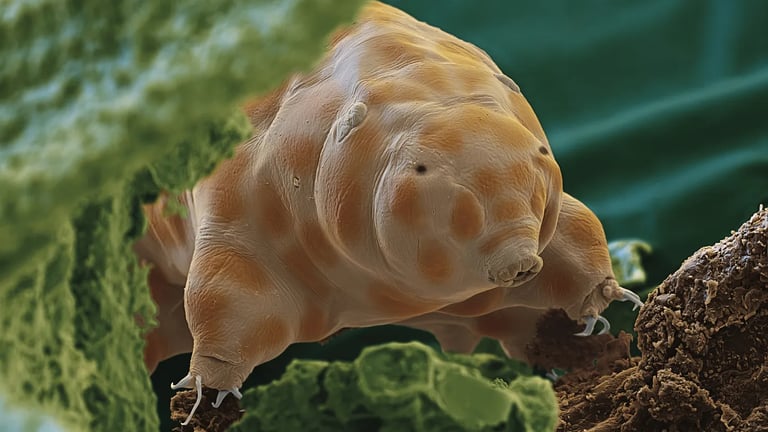
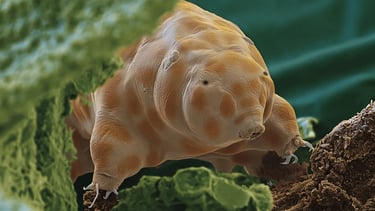
PHOTOGRAPHIE DE Oliver Meckes et Nicole Ottawa, National Geographic
Contact
Questions, reservations or online orders
Address
Follow us
114, route de seignade à peroutet
33570 - Francs
FRANCE
© 2025. All rights reserved.
Quentin VIDAL
+33 (0)6 13 70 67 97
quentin@chateaudelacraffe.com
Certified Organic Agriculture by ECOCERT
A big thank you for the help and support in our project to the
Nouvelle-Aquitaine Region, France and the European Union.